
COMMERCIAL LIGHTING APPLICATION
Fashion retail lighting
Fashion retail lighting has one job that outranks the others: the customer has to be able to judge the colour of the garment. Everything else - the atmosphere, the sense of a considered interior, the ability to redirect light when the display changes - follows from getting that right.
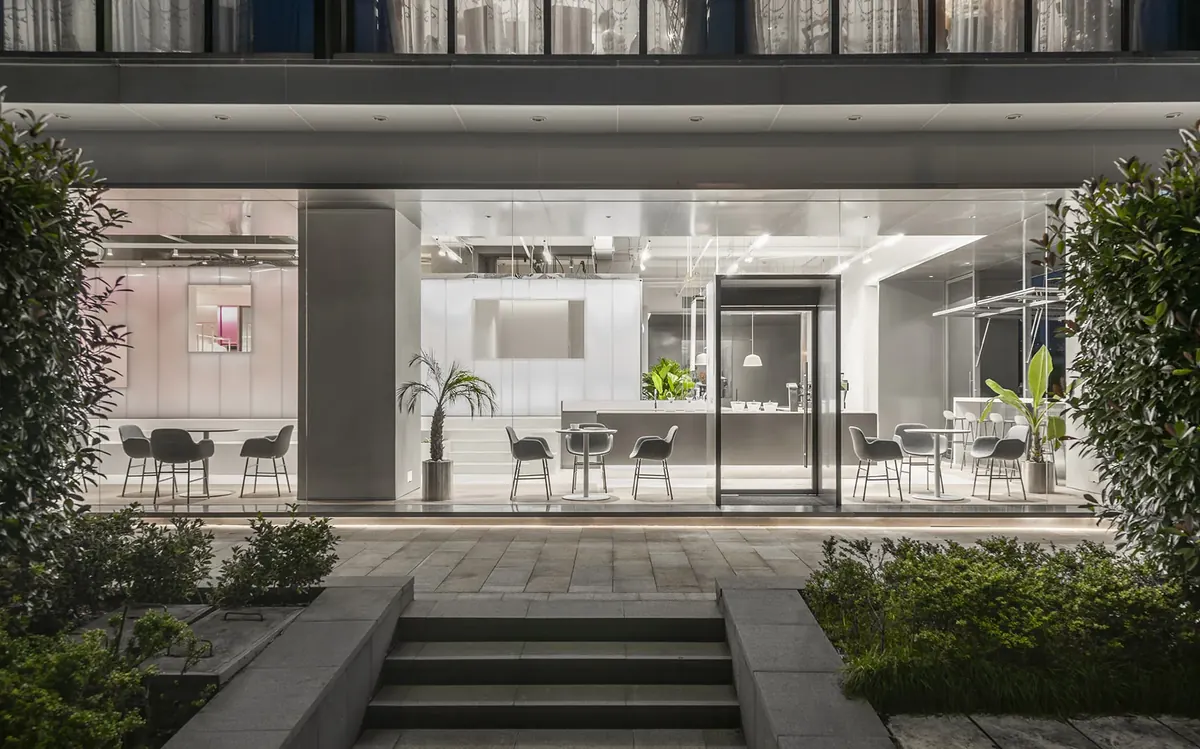
Track is the usual platform for this because a fashion floor changes far more often than a ceiling does. A rail that is already on the ceiling lets a display be re-lit without touching the building.
What this space needs
Colour has to survive the light
Fabric is judged against other fabric and against daylight. A high colour rendering index keeps the difference between two near-identical navy fabrics visible under the shop light, and keeps a white shirt reading as white rather than cream. CRI 90 is the level the TL range is published at.
Aim, not flood
Fashion displays are lit individually, not washed evenly. What matters is the light that arrives on the garment face, not the average across the floor, so the specification is about aiming and beam control rather than about the general light level.
The layout will change
Rails, mannequins and till points move. A track ceiling absorbs that change because luminaires slide along the rail and can be re-aimed, where a recessed layout would have to be re-planned with the ceiling.
How to specify it
- Choose the colour temperature against the brand: 2700 K for a warmer, softer reading, 3000 K as the usual retail middle ground, 4000 K where a crisper, more clinical look is wanted. Keep one temperature across a display wall so garments are not compared under two different lights.
- Choose a beam per display type: a narrow fixed optic for a single mannequin or a shelf edge, a wider fixed optic where a rail of garments has to be covered from a distance, and a zoomable optic where the same luminaire has to serve both.
- Decide the body size against the ceiling. A compact body reads as less intrusive on a low or exposed ceiling; the published TL03 bodies are the short ones, TL01 and TL02 the larger formats.
- Confirm the track platform early, because the rail, the adapter and the luminaire are bought as one system. Separate switched groups from one rail let general and accent lighting be controlled separately.
Related pages
Buyer questions
Which colour temperature is right for fashion retail?
It depends on the brand rather than on a rule. 2700 K reads warmer and softer, 3000 K is the usual middle ground for apparel, and 4000 K reads crisper. The one firm recommendation is consistency: keep a single colour temperature across garments that customers will compare side by side.
Do I need adjustable beams in a clothing shop?
Not necessarily, but they help where the same rail has to cover both a small display point and a longer run of garments. A 15°–55° or 20°–55° zoom lets one luminaire be re-aimed and re-focused when the display changes, instead of being replaced.
Can the lighting be changed when the shop is refitted?
On a track ceiling, yes: luminaires can be moved along the rail and re-aimed, and a rail that carries several switched groups allows the scene to be re-planned without new cabling. The rail, adapter and luminaire still have to belong to the same track platform.