
COMMERCIAL LIGHTING APPLICATION
Boutique display lighting
A boutique display is a small area carrying a small number of objects that have to look deliberate. The lighting problem is not coverage; it is control. Too wide and the display looks flat, too narrow and it looks like a spotlight in a theatre.
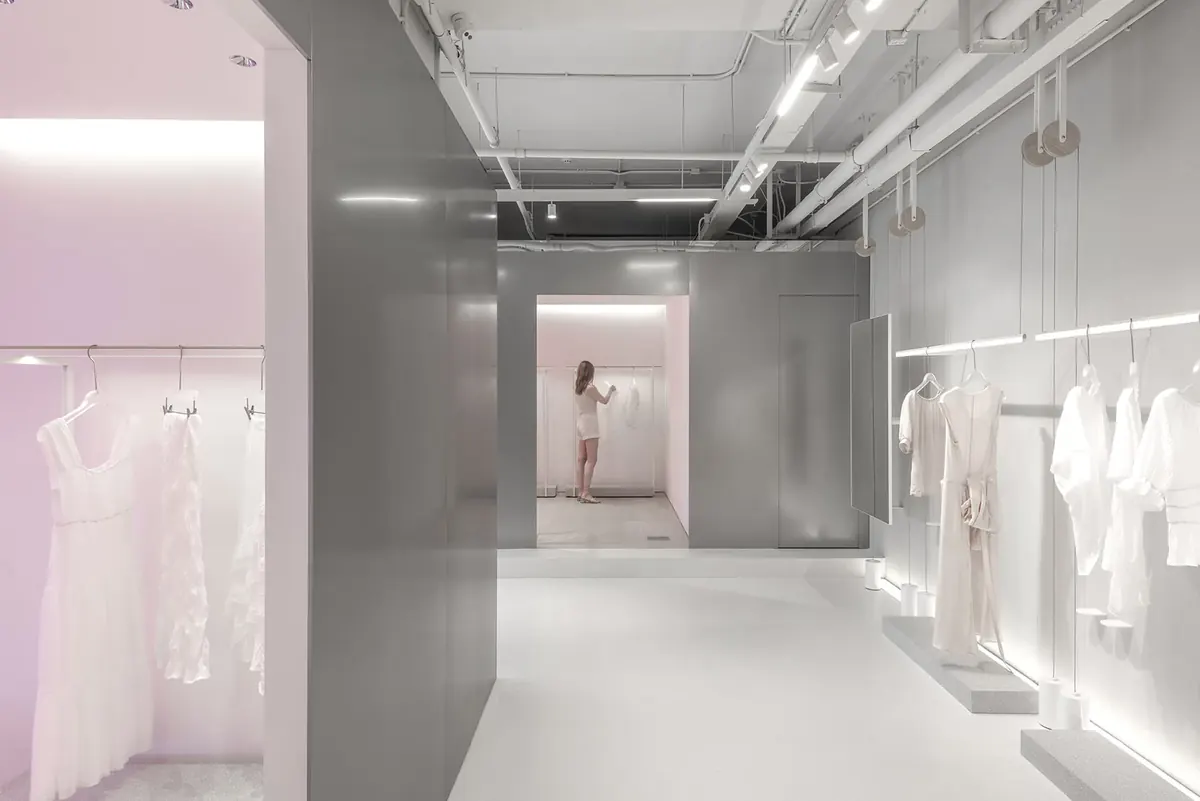
Because the display is reset often, the lighting has to be adjustable in place rather than rebuilt each time.
What this space needs
One object, one beam
A display plinth, a hanging rail end or a single accessory is lit by its own luminaire, aimed so the light comes from one side rather than straight on. That is what produces the modelling that makes an object read as three-dimensional.
The surroundings matter as much as the object
A dark, matte interior absorbs light and a white one returns it, so the same luminaire aimed the same way looks different in each. The room is part of the lighting design, which is why a calculation done on default room surfaces rarely matches the finished shop.
The display is temporary
Visual merchandising changes weekly in some stores. Every luminaire on the rail therefore needs to be reachable, aimable and re-focusable without a ladder and without a new ceiling.
How to specify it
- Set the mounting height first. It decides the beam: a narrow optic from a low rail covers a small area intensively, while the same optic from a high ceiling produces a much larger pool.
- Choose between surface-mounted and recessed track on appearance rather than on performance. A surface rail is visible and easy to change; a recessed rail is quieter in the ceiling but fixes the geometry.
- Use a short body where the rail sits close to the display. TL03 is the compact format in the published range; the longer TL01 and TL02 bodies suit higher ceilings.
- Confirm the finish against the interior. Black reads as a deliberate part of a dark fit-out, white disappears against a white ceiling, and the same rail can be supplied to match either.
Related pages
Buyer questions
How many spotlights does a display need?
As a starting point, one luminaire per display point that has to be read on its own, plus the general light the space needs to feel open. The number that matters is not the total but the aiming: three correctly aimed luminaires usually read better than six aimed at the middle of a wall.
Should the track be surface mounted or recessed?
Surface-mounted rails are easier to change and re-aim, and are the usual choice where the display changes often. Recessed rails sit flush and are chosen where the ceiling has to stay visually quiet. Both use the same luminaires as long as the adapter matches the rail.
Will the lighting still work if the display moves?
If the rail already covers the area, yes - the luminaires slide along it and are re-aimed. It is worth planning the rail run for the displays a shop might have rather than only for the opening layout.